
What Property Disclosures Really Mean
Decoding seller disclosures so you know exactly what you're buying—and what questions to ask before closing. Buy smarter with AI-powered analysis.
You've found the house. The neighborhood checks out, the layout works, and you can already picture where the couch goes. Then your agent hands you a thick stack of papers called the "seller disclosure" and suddenly you're swimming in legal jargon and checkbox grids.
Here's the thing: that disclosure document is one of the most valuable tools in your home buying toolkit. It's the seller telling you, in writing, everything they know about the property. The trick is knowing how to read between the lines.
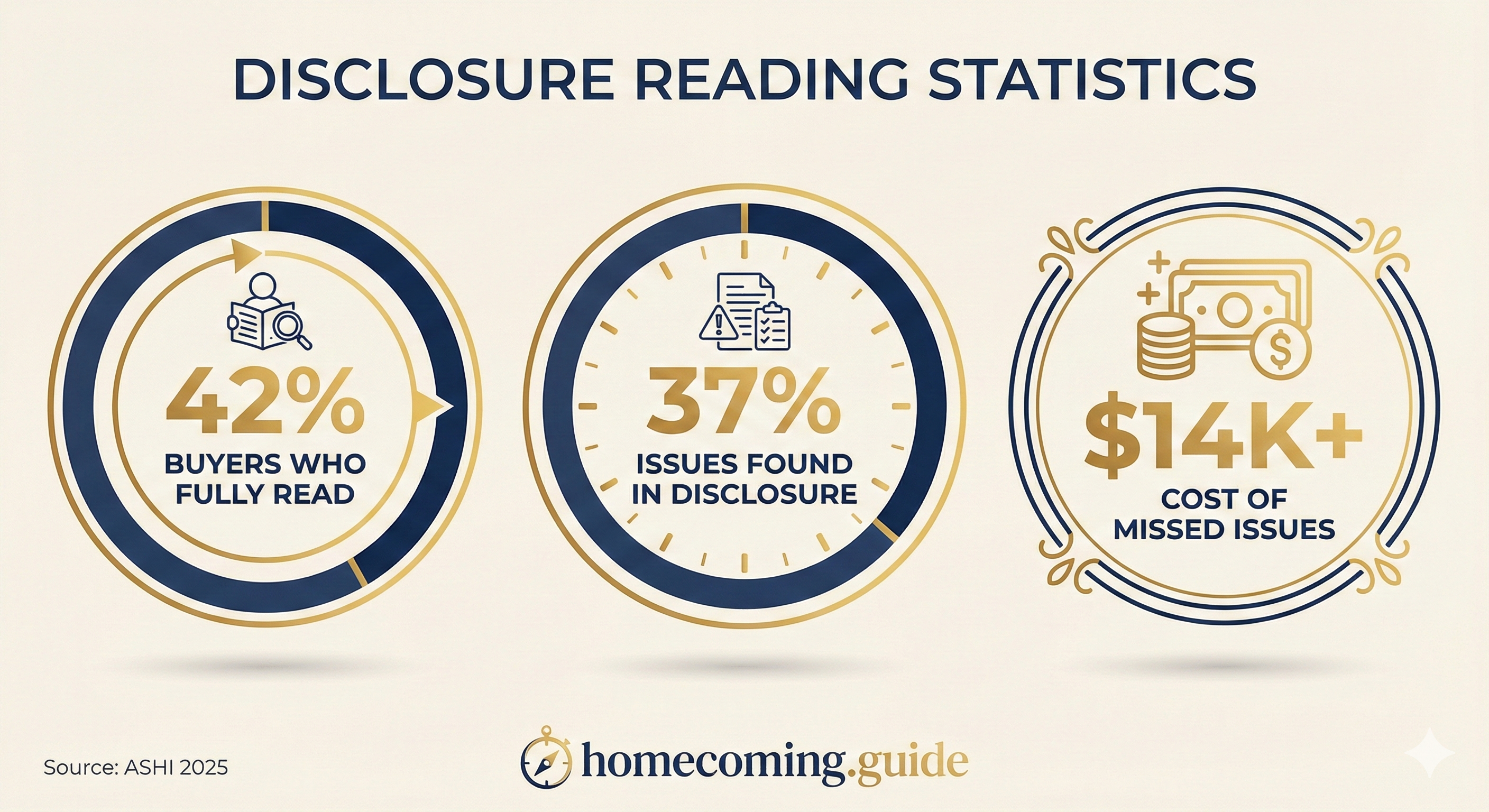
Disclosure Document Statistics
- Average disclosure length: 8-15 pages
- Buyers who fully read disclosures: 42%
- Issues discovered post-purchase: 37% could have been identified in disclosure
- Average cost of undiscovered issues: $14,000+ Source: American Society of Home Inspectors, 2025
The Basics: What Sellers Must Disclose
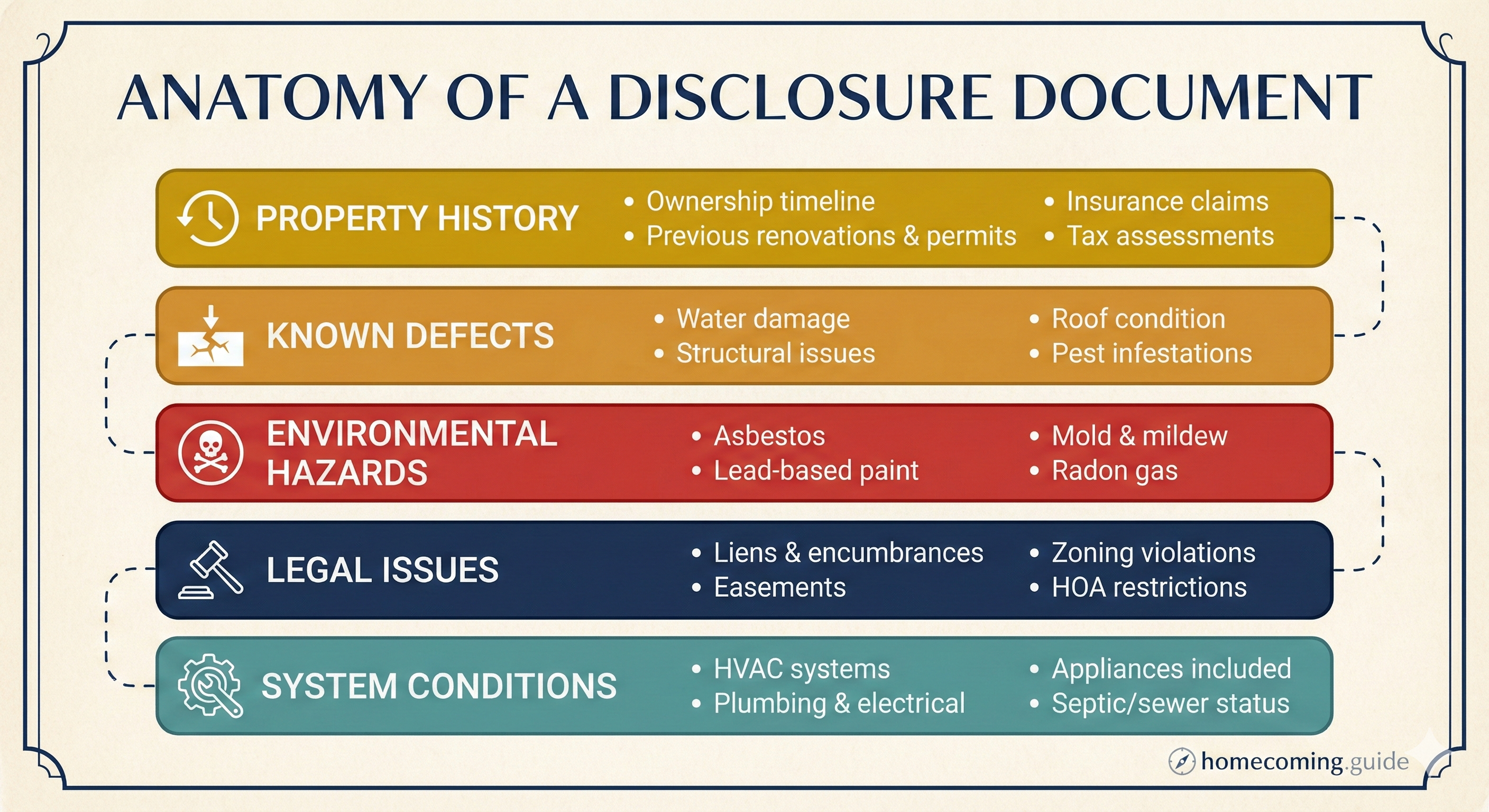
In most states, sellers are legally required to disclose known material defects—anything that could affect the property's value or your decision to buy. This typically includes:
- Structural issues like foundation cracks, roof damage, or settling
- Water problems including leaks, flooding history, or drainage issues
- System conditions for HVAC, plumbing, and electrical
- Environmental hazards such as lead paint, asbestos, or mold
- Legal matters like boundary disputes, easements, or HOA violations
What they don't have to disclose varies by state. Some states don't require disclosure of deaths on the property, for example, while others do. Your real estate agent can clarify what's required in your market.
Red Flags Worth Investigating
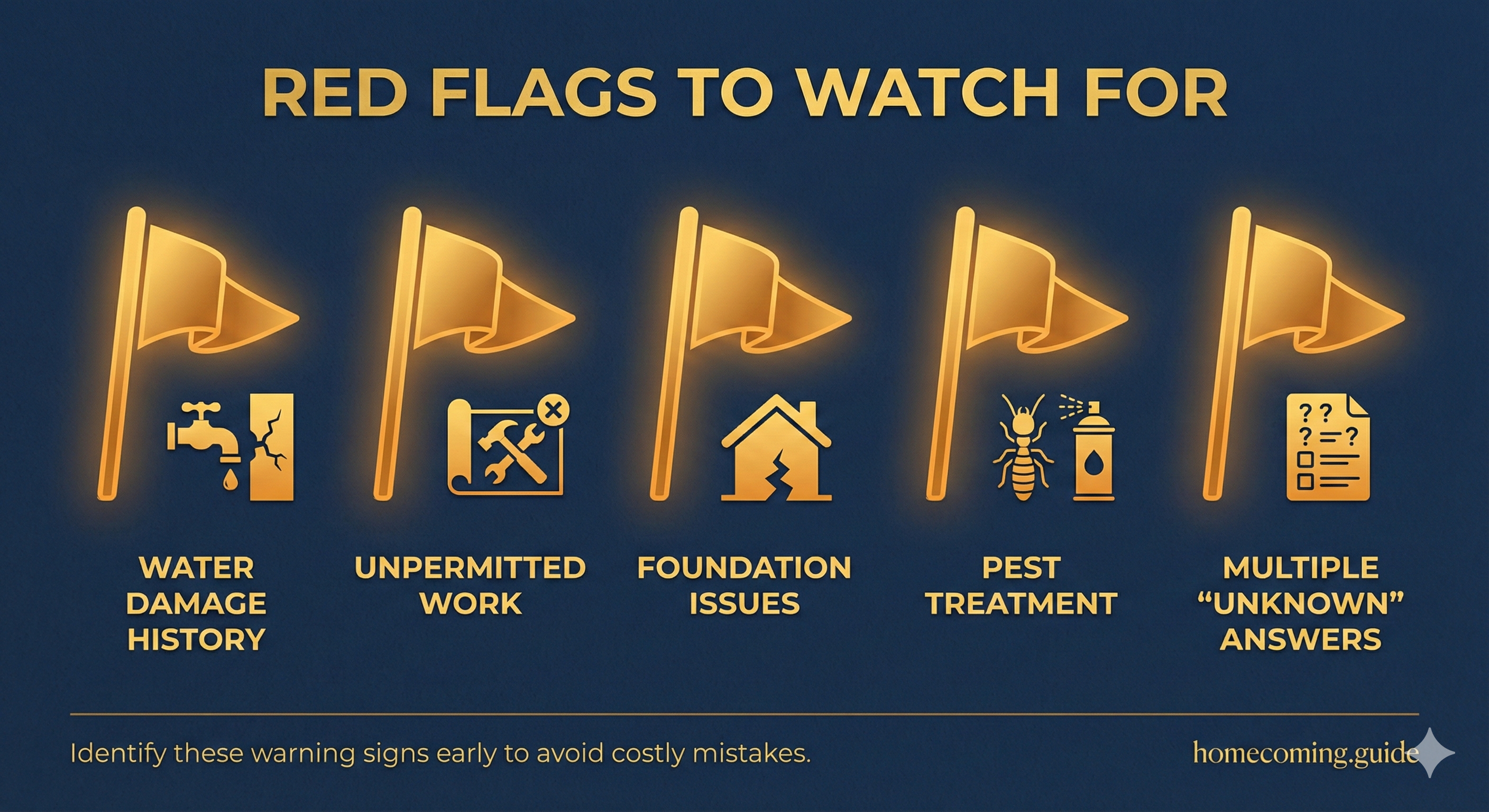
Not everything on a disclosure is cause for alarm, but certain items warrant a closer look:
"Unknown" or blank answers — When a seller marks "unknown" on multiple items, ask why. Have they only owned the property briefly? Or are they avoiding putting something in writing?
Recent repairs without permits — If the disclosure mentions recent work on electrical, plumbing, or structural elements, verify that permits were pulled. Unpermitted work can become your problem after closing.
Water intrusion history — Even if the seller says it's been "fixed," past water issues can indicate ongoing drainage problems or hidden mold. Always get a moisture inspection.
Pest treatment history — Previous termite or pest treatments don't necessarily mean current problems, but they do mean you should get a fresh inspection and check for structural damage.
Questions to Ask Your Inspector
Armed with the disclosure, you can guide your home inspector to areas that need extra attention. Before the inspection, highlight:
- Any "yes" answers about past problems
- Items marked as "repaired" (ask to see documentation)
- Systems approaching the end of their typical lifespan
- Anything that seems inconsistent with what you observed during showings
A good inspector will dig deeper into flagged areas and can often tell you whether repairs were done properly.
When Disclosures Don't Tell the Whole Story
Sellers can only disclose what they know. If they've never lived in the property (investors, inherited homes, estate sales), the disclosure might be sparse. In these cases:
- Request any inspection reports from when they purchased
- Ask neighbors about the property's history
- Order additional specialized inspections for older homes
- Check public records for permit history and previous sale disclosures
Using Disclosures in Negotiations
A disclosure that reveals issues isn't necessarily a deal-breaker—it's a negotiating tool. If the seller discloses a 15-year-old roof, you know to factor replacement costs into your offer. If there's a history of basement moisture, you might ask for a credit toward waterproofing.
The key is quantifying issues. Get contractor quotes for any disclosed problems so you can negotiate from a position of knowledge rather than fear.
The Bottom Line
Property disclosures exist to protect you. Take the time to read every page, ask questions about anything unclear, and use the information to guide your inspection and negotiations. A thorough review now can save you from expensive surprises after you've signed on the dotted line.
And remember: if something feels off about a disclosure—too many unknowns, inconsistencies with what you've seen, or a seller who seems evasive—trust your instincts. There are always more houses, but there's only one right decision for you.
Let Homecoming Put You in the Driver Seat
Reading a disclosure document takes expertise most buyers don't have. That's why we built Homecoming—your AI-powered home buying advisor.
Upload your disclosure and our AI instantly:
- Highlights red flags you might miss
- Estimates repair costs for disclosed issues
- Generates inspection questions specific to your property
- Explains legal language in plain English
Buy Smarter. Buy Confident. Get your free disclosure analysis and take control of your home buying journey.