
How to Negotiate Repairs After a Home Inspection
Turn inspection findings into leverage—without blowing up your deal. Buy smarter with AI-powered insights.
The inspection report just landed in your inbox. It's 40 pages long, lists 87 items, and your heart rate is climbing. Take a breath. Most inspection reports look alarming at first glance, but not everything requires negotiation—and knowing the difference is what separates savvy buyers from stressed-out ones.
Here's how to approach repair negotiations strategically.
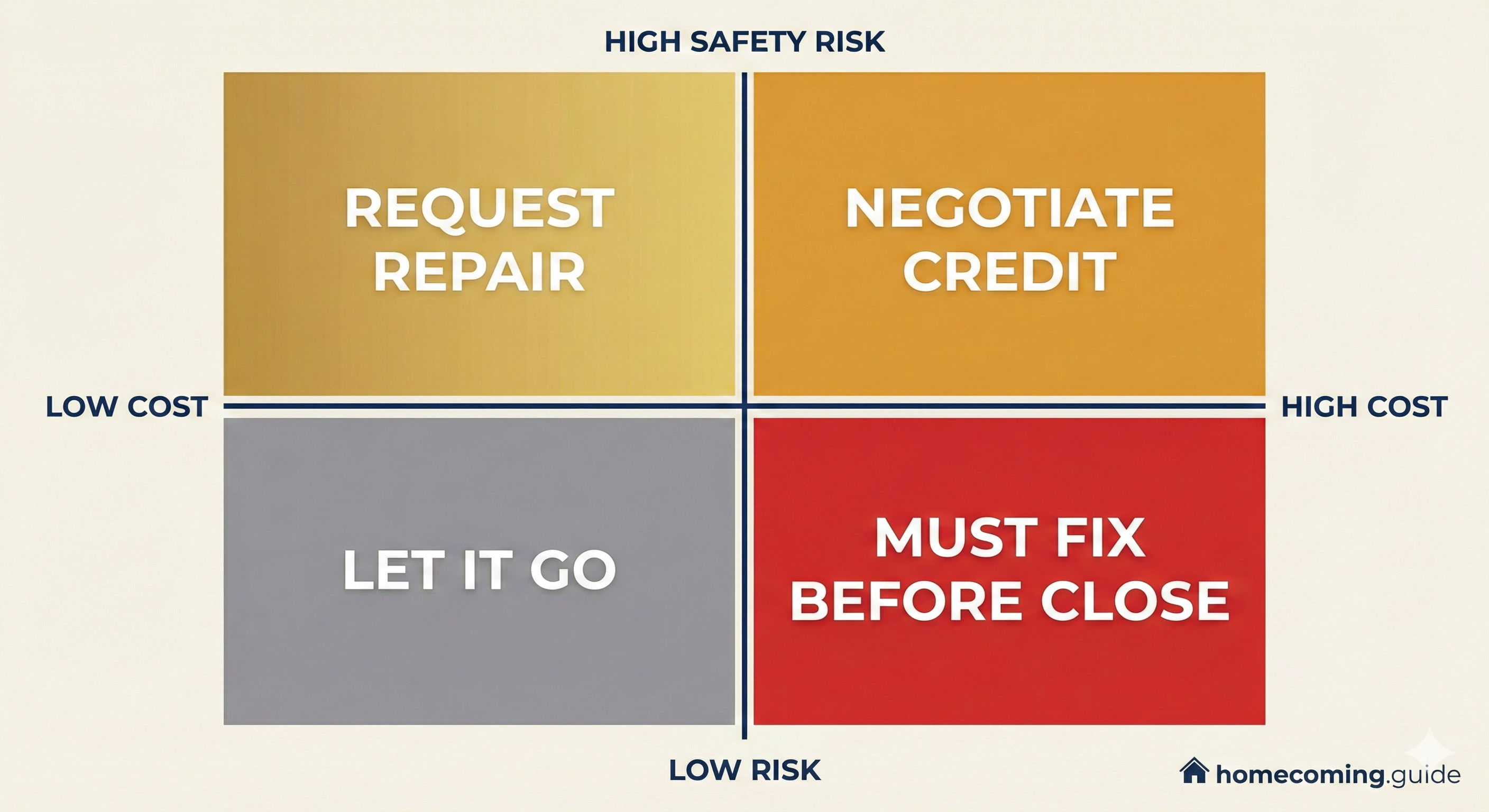
First: Understand What You're Working With
Before you ask for anything, categorize the inspection findings:
| Category | Description | Negotiable? |
|---|---|---|
| Safety hazards | Fire risks, electrical dangers, gas leaks | Always |
| Major defects | Roof failure, foundation issues, HVAC replacement | Usually |
| Code violations | Unpermitted work, outdated systems | Sometimes |
| Maintenance items | Worn weatherstripping, dirty filters | Rarely |
| Cosmetic issues | Scuffed paint, dated finishes | No |
Safety hazards and major defects are your priority. These are expensive, affect habitability, and sellers expect to address them. Maintenance and cosmetic items? Those come with every house. Asking for them makes you look inexperienced and can irritate sellers.
The Golden Rule of Repair Negotiations
Ask for things the seller couldn't have known about or advertised.
If the house was sold "as-is" with a visible crack in the foundation, you knew what you were getting. But if the inspection reveals hidden water damage in the attic or a furnace that's two years past its lifespan, those are legitimate discoveries that warrant discussion.
Three Ways to Negotiate
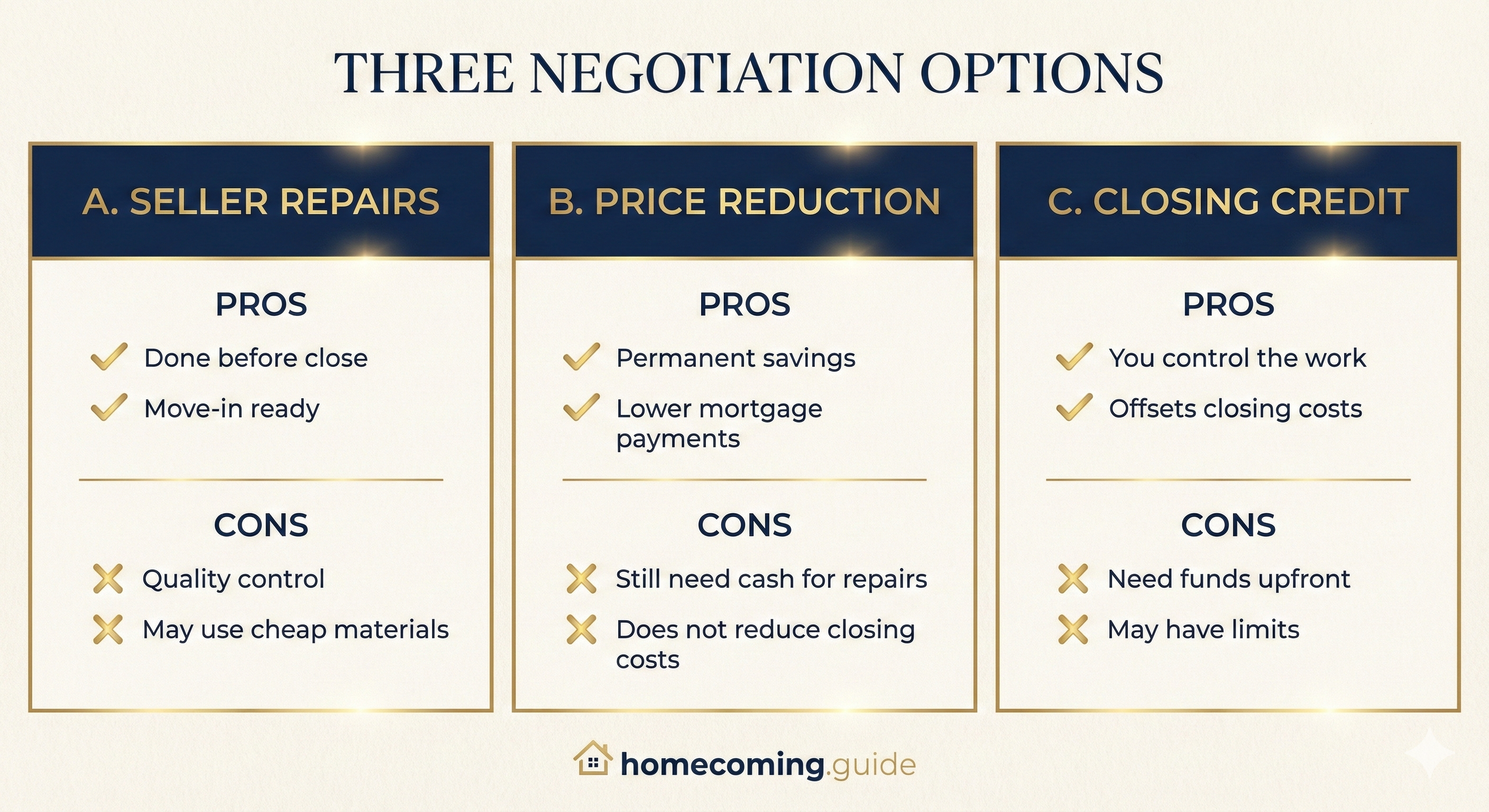
Option 1: Request Repairs Before Closing
You ask the seller to fix specific items before the sale closes. The upside: problems get addressed. The downside: you don't control who does the work or how well it's done.
Best for: Simple, objective fixes like repairing a leaky faucet, replacing a broken window, or fixing a handrail.
Risky for: Complex work like roofing or HVAC, where quality varies and you can't easily verify the repair.
Option 2: Request a Credit at Closing
Instead of repairs, you ask for money off the purchase price or a credit toward closing costs. You handle repairs yourself after closing, choosing your own contractors.
Best for: Larger projects where you want control over the work. Also useful when sellers are strapped for cash or time.
How to calculate: Get quotes from licensed contractors before making your request. A credit request backed by real numbers is harder to refuse.
Option 3: Reduce the Purchase Price
Similar to a credit, but the reduction is reflected in the sale price rather than at closing. This can slightly lower your mortgage payment and property taxes.
Best for: Significant issues that affect the home's value, not just repair costs.
What to Actually Ask For
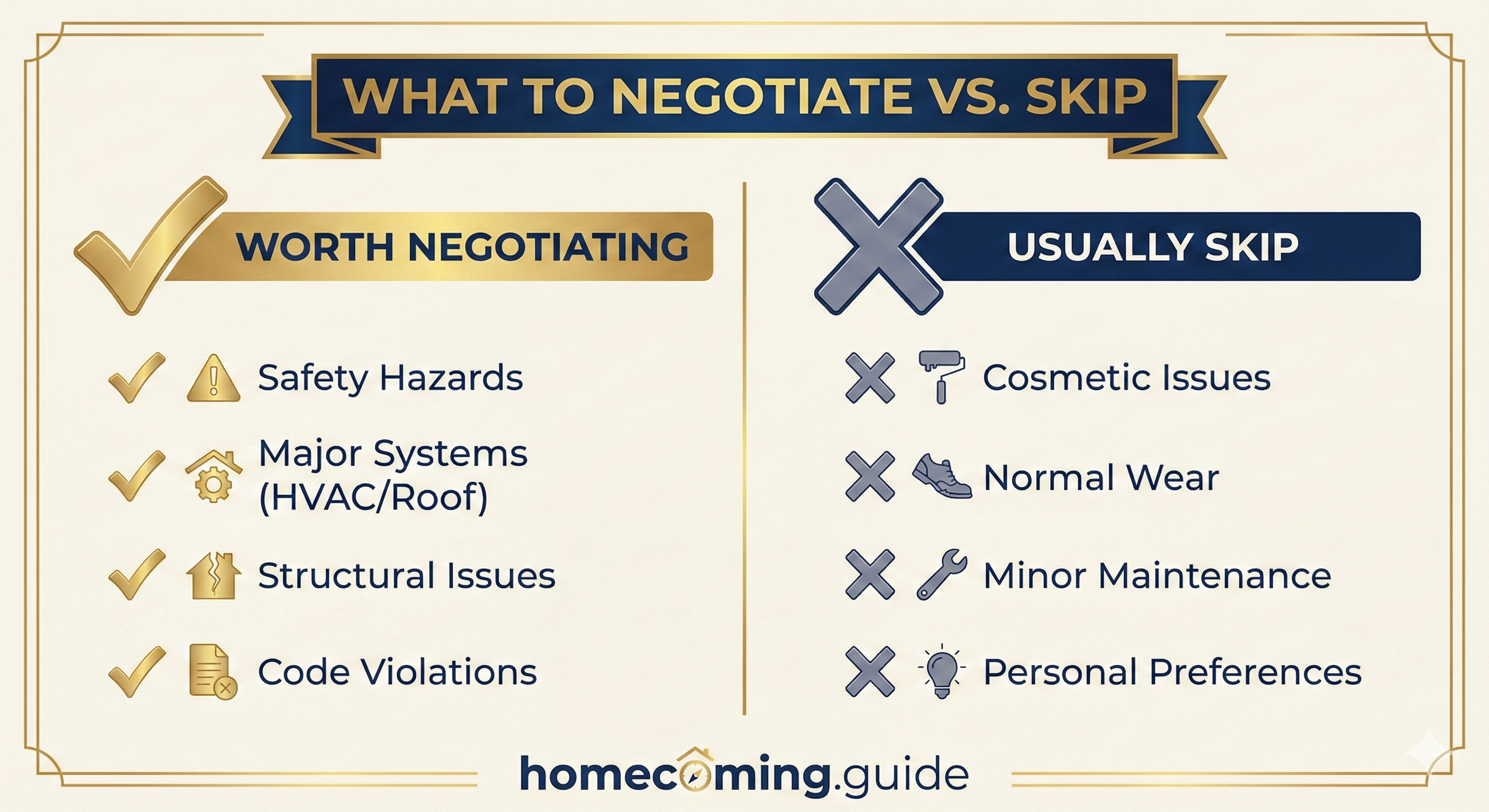
Here's a framework for deciding what makes it into your repair request:
Include:
- Items that affect health or safety
- Problems that will cost over $500 to fix
- Issues that could worsen if not addressed
- Defects that weren't visible during showings
Skip:
- Anything under $200 to repair
- Normal wear and tear
- Cosmetic preferences
- Issues you noticed before making your offer
Pro tip: Limit your request to 5-10 significant items. A laundry list of minor complaints invites rejection and signals that you're fishing for concessions rather than addressing real concerns.
How to Frame Your Request
The way you ask matters as much as what you ask for. Here's the difference between a request that gets results and one that kills deals:
Weak approach: "We found 47 issues in the inspection report and need them all addressed before we proceed."
Strong approach: "The inspection revealed three significant concerns we'd like to discuss: the HVAC system is 18 years old and showing signs of failure, there's evidence of past water intrusion in the basement, and several electrical outlets aren't grounded. We'd like to request a $12,000 credit to address these items, based on attached contractor estimates."
Be specific. Be reasonable. Lead with your biggest concerns and provide documentation.
When Sellers Push Back
Negotiation is a conversation, not a demand. If the seller counters or refuses:
Split the difference. If you asked for $15,000 and they offered $8,000, maybe $11,000 works for everyone.
Prioritize. Agree to drop minor requests if they'll address the major ones.
Get creative. Maybe they can't afford repairs, but they'll leave appliances or cover your closing costs.
Walk away. If the issues are serious and the seller won't budge, your inspection contingency lets you exit. Sometimes the best negotiation is knowing when to leave.
After You Reach Agreement
Get everything in writing—specifically, in an amendment to your purchase contract. This should include:
- Exactly what will be repaired (or the credit amount)
- Who will do the work (if repairs)
- Deadline for completion
- Right to verify repairs before closing
If the seller agrees to repairs, schedule a re-inspection or final walkthrough to confirm the work was done properly.
The Bottom Line
Repair negotiations aren't about "winning" against the seller. They're about ensuring you're paying a fair price for what you're actually getting. Focus on significant issues, come prepared with documentation, and stay solution-oriented.
Remember: the goal is to close on a house that works for you at a price that makes sense. Everything else is details.
Negotiate From a Position of Knowledge
The best negotiators know exactly what they're dealing with. Homecoming—your AI-powered home buying advisor—analyzes your disclosure documents and gives you instant cost estimates, risk assessments, and the documentation you need to negotiate with confidence.
Buy Smarter. Buy Confident. Upload your disclosure and put yourself in the driver seat before your next negotiation.