
The Complete Home Inspection Checklist for 2026
Know exactly what inspectors look for—and catch issues before they become your problem. Buy smarter with your AI-powered advisor.
A home inspection is your last line of defense before signing a six-figure commitment. It's the difference between buying a solid home and inheriting someone else's maintenance backlog. But here's what most buyers don't realize: you're not just hiring an inspector—you're partnering with them.
The more you know about what they're checking, the better questions you'll ask and the smarter decisions you'll make.
Home Inspection Statistics
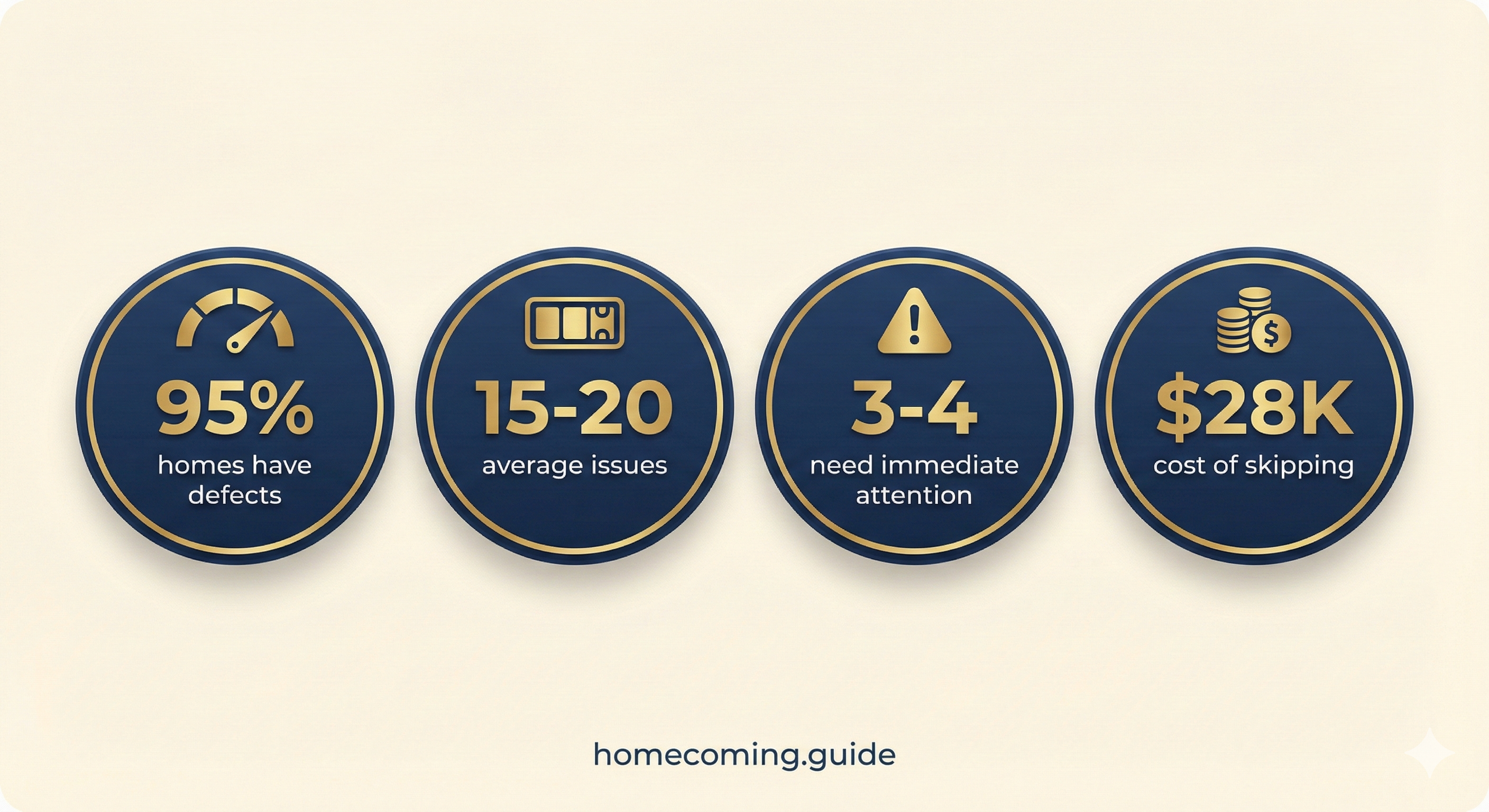
- Homes with at least one defect: 95%
- Average number of issues found: 15-20 items
- Issues requiring immediate attention: 3-4 on average
- Buyers who attended their inspection: 63%
- Cost of skipping inspection (average unexpected repairs): $28,000 Source: ASHI Member Survey, 2025
What a Standard Inspection Covers
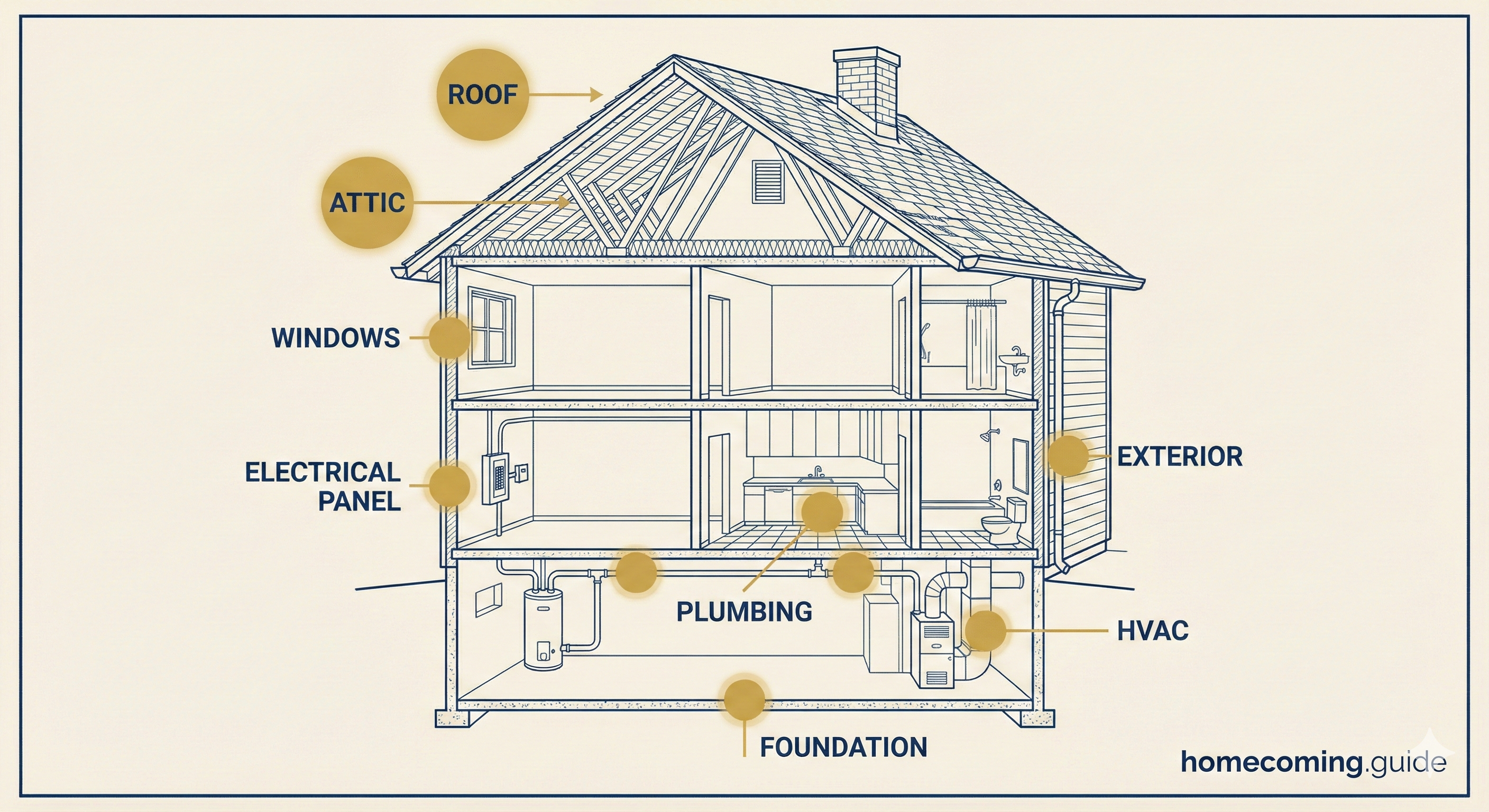
A typical home inspection takes 2-4 hours and examines the home's major systems and structural components. Here's what's on the checklist:
Roof and Exterior
- Roof covering — Missing, damaged, or curling shingles; wear patterns that suggest age
- Flashing — Seals around chimneys, vents, and skylights (a common leak source)
- Gutters and downspouts — Proper drainage away from the foundation
- Siding and trim — Rot, damage, or improper installation
- Grading — Ground should slope away from the house to prevent water intrusion
Foundation and Structure
- Foundation walls — Cracks, bowing, or signs of water penetration
- Crawl space or basement — Moisture, mold, pest evidence, proper ventilation
- Framing — Visible structural members checked for damage or modifications
- Floors and ceilings — Sagging, uneven surfaces, or signs of settling
Plumbing
- Water heater — Age, condition, proper installation, safety features
- Supply lines — Material type (copper, PEX, galvanized), visible corrosion or leaks
- Drain lines — Proper slope, signs of leaks or backups
- Fixtures — Water pressure, hot water delivery, proper drainage
- Main shutoff — Location and functionality
Electrical
- Service panel — Capacity, condition, proper labeling, signs of amateur work
- Wiring type — Copper, aluminum, or older knob-and-tube (insurance implications)
- Outlets and switches — Grounding, GFCI protection where required
- Visible wiring — Proper installation, no exposed conductors
HVAC Systems
- Furnace/heat pump — Age, condition, filter status, safety controls
- Air conditioning — Refrigerant lines, condenser condition, cooling performance
- Ductwork — Visible damage, proper connections, insulation
- Ventilation — Bathroom and kitchen exhaust, attic ventilation
Interior
- Windows and doors — Operation, seals, locks, signs of moisture between panes
- Walls and ceilings — Cracks, stains, or other damage
- Floors — Condition under carpets when possible, squeaks, levelness
- Stairs and railings — Safety and stability
- Attic — Insulation levels, ventilation, signs of leaks or pests
What a Standard Inspection Doesn't Cover
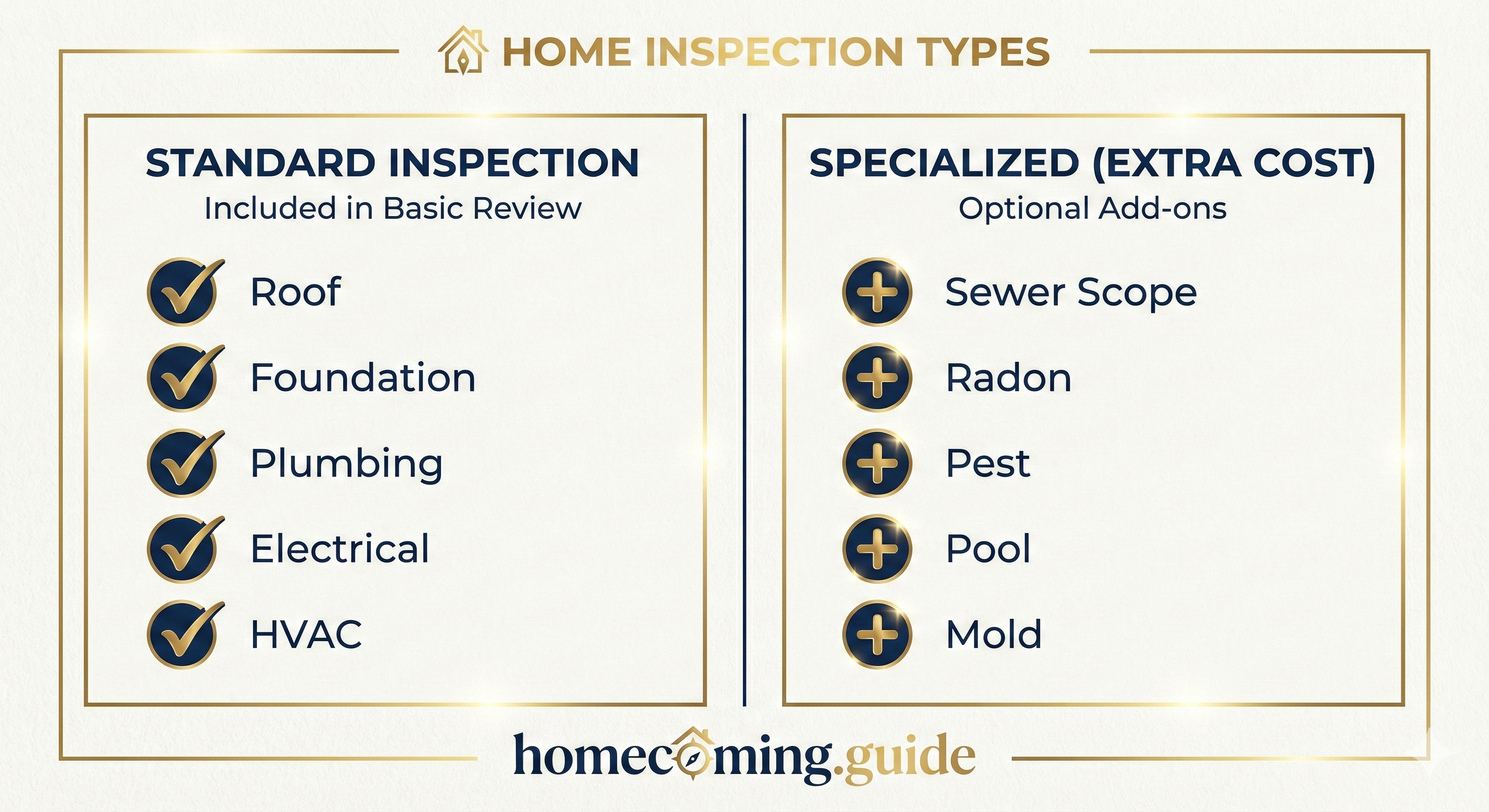
Inspectors work within their scope of expertise and time constraints. You'll typically need separate specialists for:
- Sewer line scoping — Critical for older homes; $150-400 but can reveal expensive problems
- Chimney inspection — If you plan to use the fireplace
- Pool and spa — Requires specialized knowledge
- Pest inspection — Often done separately, sometimes required by lenders
- Radon testing — Important in certain geographic areas
- Mold testing — Beyond visual identification
- Environmental hazards — Lead paint, asbestos (testing, not just identification)
How to Prepare for Inspection Day
Show up at the beginning of the inspection. Yes, the whole thing. Here's why:
See problems in context. Photos in a report don't tell you whether something is a minor fix or a structural concern. Being there lets you ask "is this normal?" in real time.
Learn the house. Your inspector can show you where the shutoffs are, how to change the furnace filter, and what maintenance the home needs. This is your crash course in homeownership.
Prioritize repairs. Not everything in the report needs immediate attention. Your inspector can help you understand what's urgent, what's routine maintenance, and what's just cosmetic.
Questions to Ask During the Inspection
Don't wait for the report. Ask these as you go:
- "What's the remaining lifespan of the roof/HVAC/water heater?"
- "Is this a safety issue or a code issue?" (They're not the same)
- "What would you do first if this were your house?"
- "Are there signs this was a DIY repair vs. professional work?"
- "What maintenance has clearly been neglected?"
After the Inspection
Your inspection report will likely list dozens of items. Take a breath—this is normal. Even new construction has inspection findings.
Organize items into categories:
- Safety hazards — Must be addressed before closing
- Major systems — Big-ticket items that affect your offer
- Maintenance items — Normal upkeep you'll handle as the owner
- Cosmetic issues — Usually not worth negotiating
Use the significant findings to either negotiate repairs, request credits, or—in serious cases—walk away. Your inspection contingency exists for exactly this reason.
The Bottom Line
A home inspection isn't a pass/fail test. It's a diagnostic tool that tells you what you're really buying. The best inspection is one where you leave understanding the home better than you did walking in—its strengths, its weaknesses, and exactly what you're signing up for.
Don't skip the inspection to make your offer more competitive. That's a gamble that rarely pays off. The few hundred dollars you spend now could save you from five-figure surprises later.
Get a Custom Inspection Checklist
Every property is different. The disclosure documents reveal specific concerns that your inspector should investigate.
Homecoming—your AI-powered home buying advisor—analyzes your disclosure and generates a custom inspection checklist highlighting:
- Areas mentioned in the disclosure that need closer examination
- Questions to ask your inspector based on the property's history
- Red flags that warrant specialized inspections
Buy Smarter. Buy Confident. Upload your disclosure and get your personalized inspection guide before you schedule.