
10 Mistakes First-Time Home Buyers Actually Make
Real pitfalls we see buyers stumble into—and how to sidestep them entirely. Buy smarter with your AI-powered home buying advisor.
Buying your first home is exciting. It's also a crash course in making decisions you've never made before, often under time pressure, with more money on the line than you've ever spent. No wonder first-time buyers make predictable mistakes.
The good news? These mistakes are avoidable. Here are the ten we see most often—and how to dodge them.
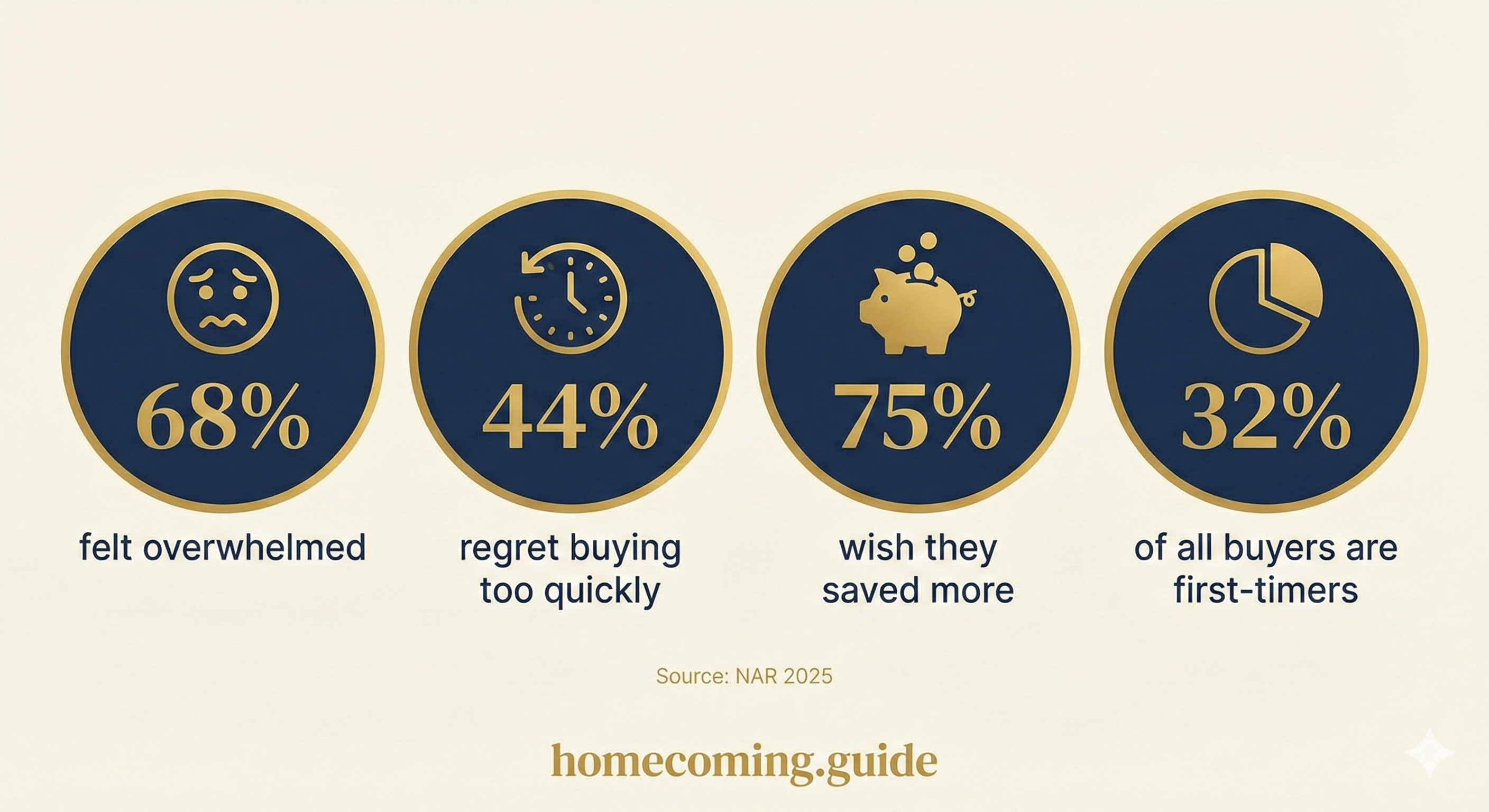
First-Time Buyer Statistics
- Median age of first-time buyers: 36 years
- First-time buyers as share of market: 32%
- Buyers who wish they'd started saving sooner: 75%
- First-time buyers who felt overwhelmed: 68%
- Regret buying too quickly: 44% Source: National Association of Realtors, 2025
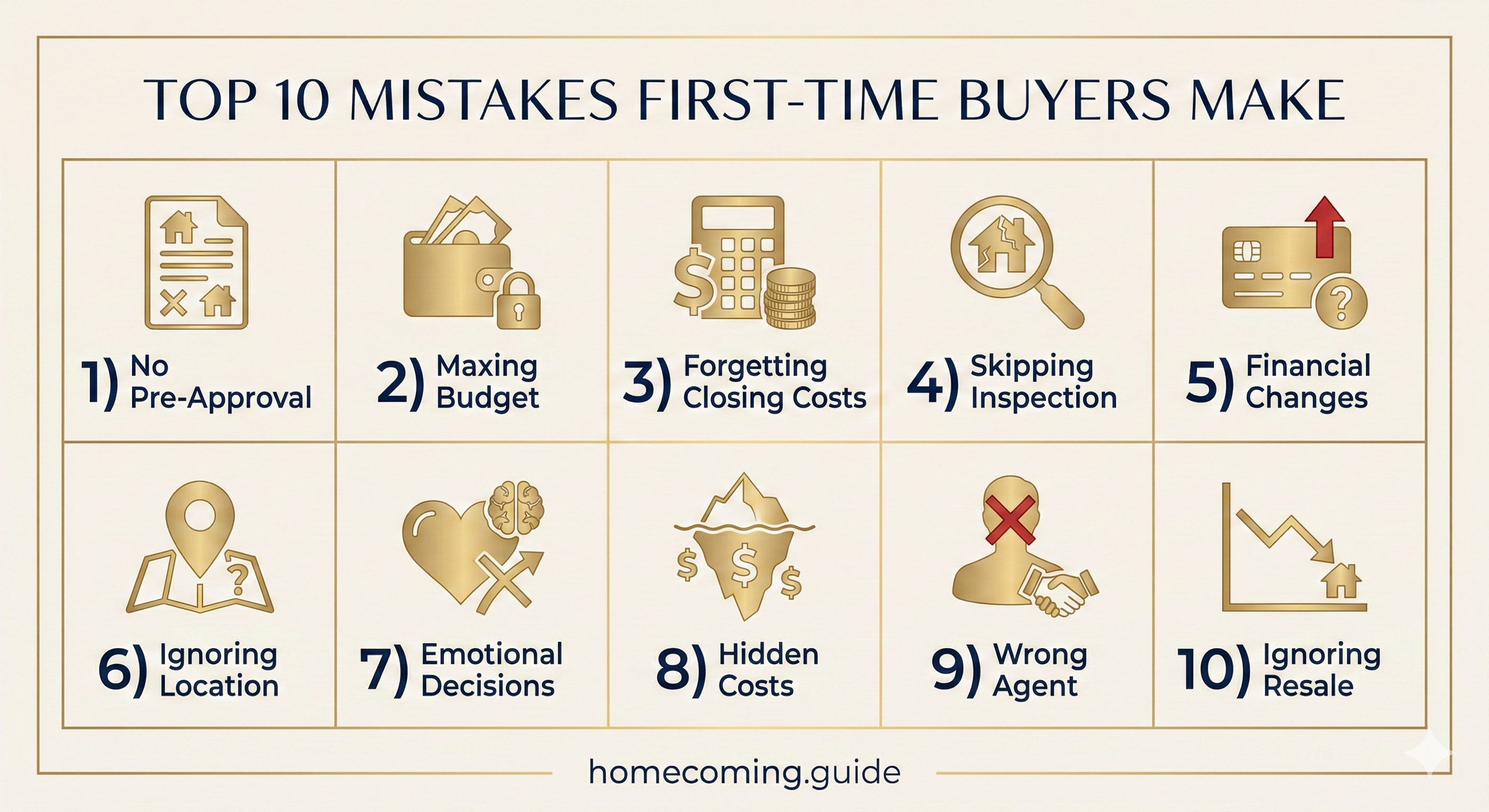
1. Shopping for Homes Before Getting Pre-Approved
It's tempting to browse listings first and figure out financing later. But here's what happens: you fall in love with a home that's $50,000 above what you actually qualify for, or you lose out to a buyer who already has their financing lined up.
The fix: Get pre-approved (not just pre-qualified) before you start touring. You'll know your real budget and sellers will take your offers seriously.
2. Maxing Out Your Budget
Just because a lender approves you for $500,000 doesn't mean you should spend $500,000. Lenders calculate what you can pay, not what you should pay. They don't know about your travel goals, your student loans, or your plans to have kids.
The fix: Set your budget based on the monthly payment you're comfortable with, including taxes, insurance, and maintenance. A good rule: aim for a payment that leaves room to still save and enjoy life.
3. Forgetting About Closing Costs
Your down payment isn't the only cash you need at closing. Closing costs typically run 2-5% of the purchase price and include lender fees, title insurance, prepaid taxes, and more. On a $400,000 home, that's $8,000-$20,000 on top of your down payment.
The fix: Ask your lender for a detailed estimate early. Some closing costs are negotiable; others are fixed. Know the total before you commit.
4. Skipping the Home Inspection
In competitive markets, some buyers waive inspections to make their offers more attractive. This is almost always a bad idea. You're betting tens of thousands of dollars that nothing is wrong with a house you've walked through for 30 minutes.
The fix: Keep the inspection contingency. If you're in a hot market, consider a pre-inspection before making an offer, or offer to accept the home "as-is" while still completing an inspection for informational purposes.
5. Making Major Financial Changes Before Closing
Bought a new car? Opened a credit card? Changed jobs? Any of these can derail your mortgage approval between pre-approval and closing. Lenders re-verify your finances before funding the loan.
The fix: Maintain the status quo from pre-approval through closing. No new credit, no large purchases, no job changes. Even paying off debt can temporarily affect your score.
6. Only Considering the House, Not the Location
You can change almost everything about a house except where it sits. That charming fixer-upper loses its appeal when you realize the commute is 90 minutes, the schools are struggling, or there's a landfill being proposed next door.
The fix: Research the neighborhood as thoroughly as the house. Drive by at different times, talk to potential neighbors, check development plans, and verify school boundaries if that matters to you.
7. Letting Emotions Drive Decisions
It's easy to fall in love with a house and overlook serious problems. Crown molding and a big backyard are nice, but they don't compensate for foundation issues or an outdated electrical system.
The fix: Make a checklist of your must-haves and deal-breakers before you start looking. Refer back to it when emotions run high. Bring a level-headed friend to second showings.
8. Not Understanding the True Cost of Homeownership
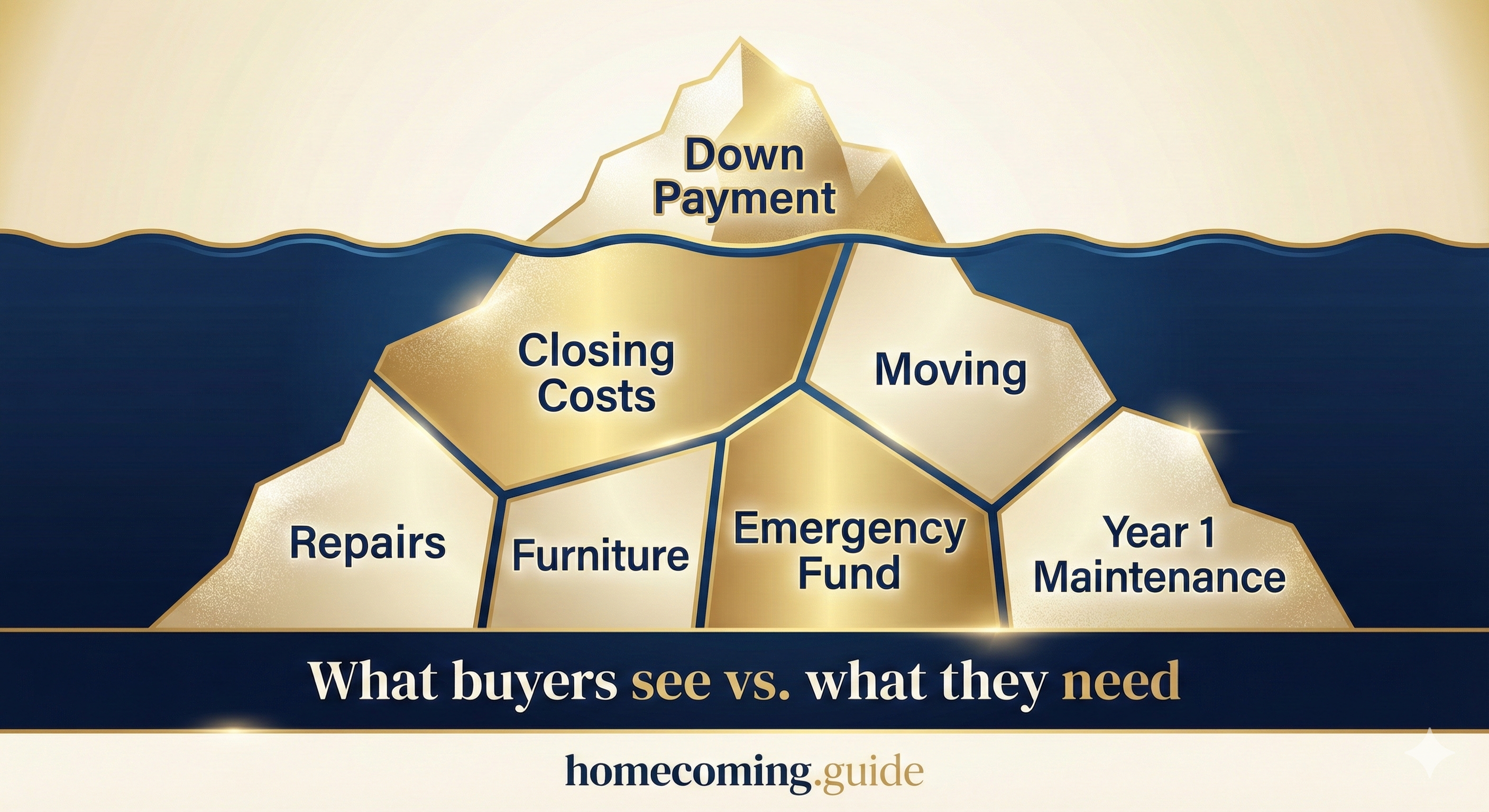
Your mortgage payment is just the beginning. You'll also pay property taxes, insurance, HOA fees (if applicable), utilities, and maintenance. A common estimate: budget 1-2% of the home's value annually for repairs and upkeep.
The fix: Before buying, calculate all the ongoing costs. Compare them to what you're currently paying in rent. Make sure the numbers work month after month, not just at closing.
9. Choosing the Wrong Agent (or Going Without One)
Not all agents are equal, and in most cases, the seller pays the buyer's agent commission—so there's little reason to go without representation. A good buyer's agent knows the market, spots red flags, and negotiates on your behalf.
The fix: Interview multiple agents. Ask about their experience with first-time buyers, their knowledge of your target neighborhoods, and how they communicate. Choose someone who educates rather than pressures.
10. Ignoring Future Resale Value
Even if you plan to stay forever, circumstances change. Job relocations, growing families, and life events happen. Buying a home with quirky features or in a declining area can make it hard to sell later—or force you to sell at a loss.
The fix: Think about who would buy this home after you. Avoid overly personalized properties or locations with fundamental drawbacks. The best first home is one that would appeal to the next first-time buyer too.
The Bottom Line
First-time home buying mistakes usually come from one of three places: moving too fast, not asking enough questions, or letting emotions override logic. Take your time, do your homework, and surround yourself with professionals who have your interests at heart.
Your first home doesn't have to be perfect. But it should be a solid financial decision that sets you up for what comes next—whether that's building equity, starting a family, or eventually moving up to your forever home.
Don't Make Mistake #4—Let AI Help
Skipping disclosure analysis is one of the costliest mistakes first-time buyers make. Homecoming—your AI-powered home buying advisor—reads every line so you don't have to.
Upload your disclosure documents and get instant risk identification, cost estimates, and expert-level insights. Buy Smarter. Buy Confident. Start your free analysis and take the driver seat in your home buying journey.